
July 13, 2026
Reliable Managed Automation Services That Actually Work
Managed automation services turn individual workflows into reliable processes: with monitoring, clear responsibilities, and no operational surprises.
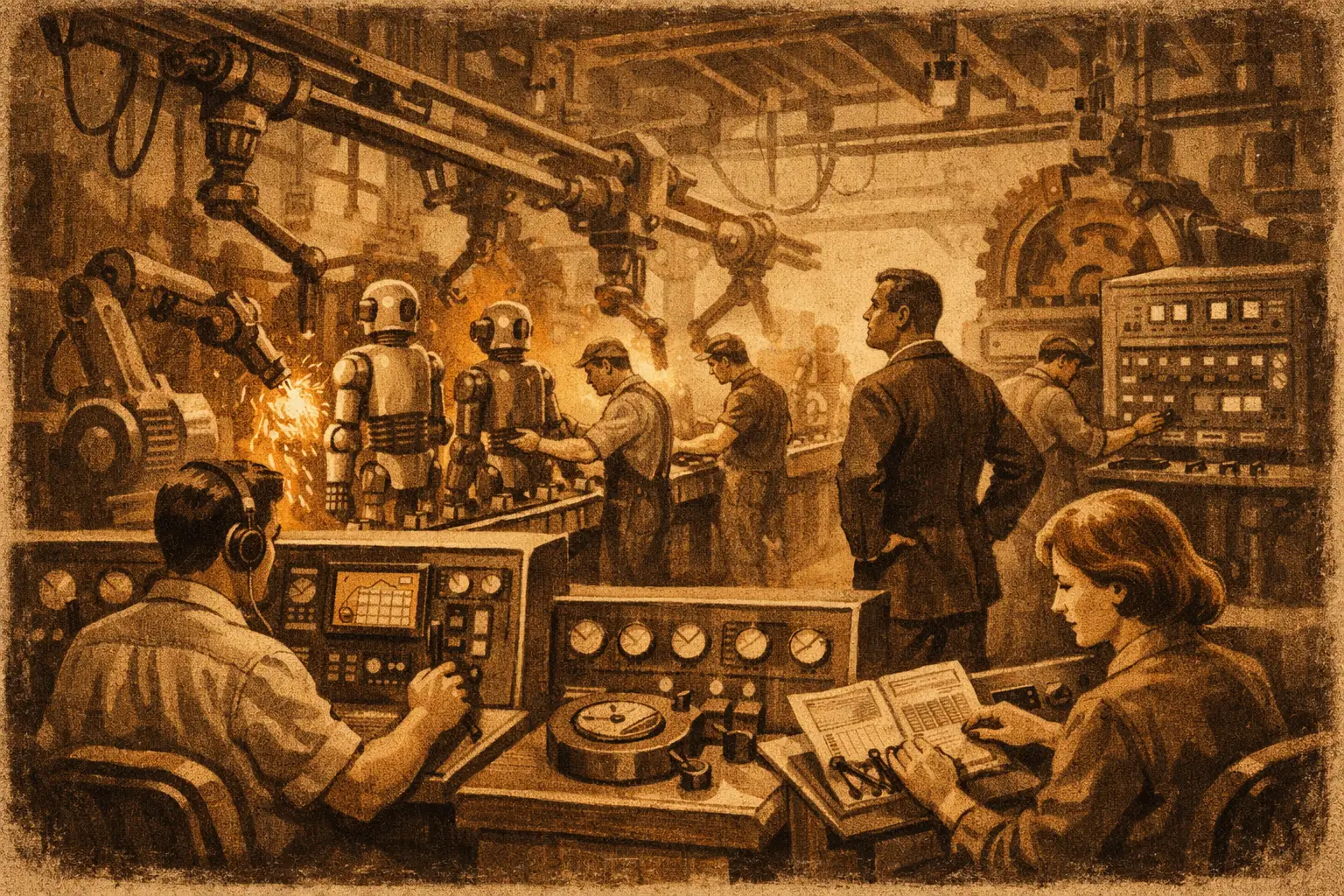
Managed automation services: Who keeps the workflow running tomorrow?
An automated process rarely fails because a model doesn’t produce an answer. It fails when an input field suddenly remains empty, an API changes its format, or an employee doesn’t spot an exception in time. Managed automation services address exactly this: not the one-time setup of a workflow, but the question of who checks, corrects, and takes responsibility for it tomorrow.
For many companies, the problem begins after a successful pilot project. A workflow extracts invoices, transfers data to the ERP, and initially saves time. Three months later, a supplier changes their layout. The extraction reads the IBAN into the invoice number field, no one notices in the daily rush, and accounting continues working with incorrect data. This isn’t a model problem. It’s a missing operational process.
Why automation often stalls after go-live
A project team typically evaluates a prototype based on a clear case: the document arrives in a known format, the data is complete, the interface responds as expected. Operational reality, however, consists of deviations. An invoice has two order numbers. A lead enters a private instead of a business email address. The CRM receives a duplicate entry. A voice agent doesn’t understand a name and doesn’t trigger a callback.
Without exception handling, such cases either silently end up in an error log or block the entire process. Both cost time. The difference isn’t whether a system makes errors. The difference is whether it detects, prioritizes, and passes errors to the right person.
Especially in workflow automation, responsibilities are often clarified too late. IT operates the interface, operations knows the process, finance checks the results, and a specialist department formulated the original need. If no one is designated for daily control, no one feels responsible in an emergency. An automated process therefore needs more than a technical handover. It needs a clear operational framework.
A concrete case: Data extraction isn’t approval
Take document processing for incoming invoices. A system can extract supplier, amount, due date, and cost center and transfer the values to the ERP. This makes sense when hundreds of documents arrive monthly and employees repeatedly enter the same fields.
The critical question, however, is: What happens in case of uncertainty? If a document contains two amounts, the automation shouldn’t guess. It can flag the case with a confidence value below a set threshold and forward it to a person for review. This human-in-the-loop step isn’t a step back. It limits risk to cases that are actually unclear.
The technical plausibility check also remains crucial. The system can verify, for example, whether an order number exists, whether the invoice amount falls within a defined range, and whether bank details differ from the last confirmed dataset. It checks whether a document makes sense in the process—not just whether it looks like a real document.
In regulated processes, additional requirements apply. For KYC or KYB checks, it must be traceable which data was used, which rule triggered an exception, and who made the final decision. For certain identity and signature processes, eIDAS requirements may also be relevant. An inexplicable automatic decision is operationally hard to justify there, even if the hit rate looked good in testing.
What managed automation services must deliver in operation
Managed automation services aren’t a waiting loop for a one-time workflow. They combine implementation with ongoing service. The goal is clear: the process should function measurably, exceptions should be visible, and a responsible party should intervene before an error causes follow-up costs.
This includes monitoring first. For each critical workflow, signals are defined: number of processed cases, error rate, processing time, open exceptions, and status of involved APIs. In a CRM enrichment process, for example, it would be noticeable if only 25% of datasets are enriched instead of the usual 80%. The cause could be a changed data source, an expired access, or a new input format. Without a measurement point, it often goes undetected.
Equally important are clear responsibilities and agreed response times. Uptime and SLAs are only helpful if they reflect the business case. For an internal reporting workflow, a fix by the next business day may suffice. For a process that releases payments or prioritizes AML alerts, shorter escalation paths and a defined manual fallback are needed.
Reconciliation also belongs in operations. If a workflow transfers data between shop, CRM, accounting, and payment provider, it must be regularly checked whether source and target have the same number and values. A successful API call only proves that an interface responded. It doesn’t prove that the process arrived correctly in terms of content.
The pragmatic approach: process first, then model
The right entry point isn’t a catalog of possible AI applications. It’s a brief operational inventory. Where is copying, searching, calling, or reconciling done today? Which cases repeat at least weekly? And where does an error lead to financial, regulatory, or customer risks?
A good candidate has a clear input signal, a defined decision, and a verifiable result. The automatic pre-qualification of leads is an example: the system can check industry, company size, and contact information, supplement data in the CRM, and only forward suitable inquiries to sales. The process becomes measurable through the number of qualified leads, the rate of incorrect assignments, and the time until first contact.
Less suitable are processes whose rules change daily or whose results no one can verify in terms of content. There, it often makes sense to first organize responsibilities and data quality. Automation accelerates an unclear process. It doesn’t make it clearer.
After selection, the process is broken down into small, testable steps: input, validation, decision, handover, exception, and completion. For each step, it’s defined which data is needed, which integration or API is involved, and who acts in case of deviations. Only then is it decided whether classic rules, data extraction, an AI agent, or a combination makes sense.
This is deliberately pragmatic. For a clear duplicate check in the CRM, a rule-based comparison is often more reliable and cheaper than a language model. For classifying free email inquiries, an AI agent can make sense if it only decides within clear categories and forwards unclear cases. The technology follows the process, not the other way around.
Operations need a fixed rhythm
After go-live, the real work begins. In the first weeks, exceptions should be closely checked because real data almost always shows new variants. This leads to adjustments in rules, prompts, data fields, or approval limits. Every change should be documented, tested in an isolated case, and only then adopted into the running process.
A fixed monthly rhythm creates order: Which exceptions occur most frequently? Where is data quality declining? Which integration repeatedly causes errors? Which manual checks can be demonstrably reduced, and which must remain for risk or quality reasons? This turns individual automations into a manageable operational inventory.
CINDR.LA combines consulting, implementation, and ongoing operations because this separation in practice often creates exactly the gap where workflows get stuck. The crucial point isn’t automating as much as possible. The crucial point is that the automated part is clearly defined, honestly evaluated, and reliably managed.
If you automate a process, don’t just plan the go-live. Plan monitoring, reconciliation, approvals, escalations, and a responsible person right from the start. Then there are no surprises—and the automation remains usable even when data, interfaces, and requirements change.